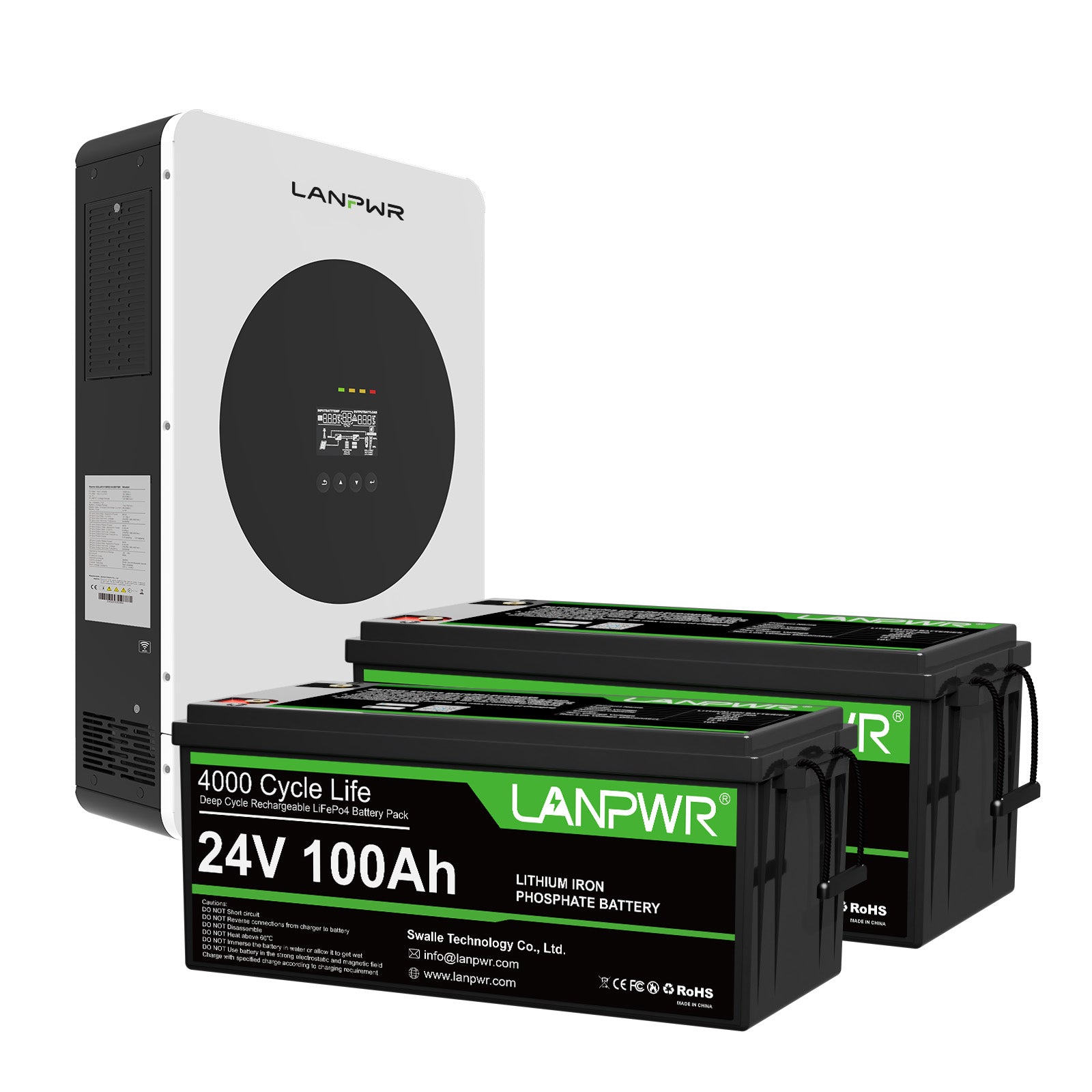
 Extreme environmental adaptability and safety standards are the core requirements of off-grid systems. The operating temperature range of LANPWR batteries is from -20℃ to 60℃. Even at a low temperature of -10℃, they still maintain 85% capacity output (less than 50% for lead-acid batteries), ensuring stable power supply for users in high-latitude or mountainous areas during winter. In the thermal runaway test required by UL 1973 certification, when overcharged to 150% SOC, the peak temperature of the single cell was only 102 ° C (over 600 ° C for ternary lithium batteries), and there was no flame ejection. The puncture test conducted by TUV Rheinland in Germany showed that after a battery short circuit, it took 4.3 minutes for the voltage to drop to 0V, and the peak surface temperature was 71.2℃, which was far lower than the ignition critical point of 200℃. During the 2023 California wildfire season, the Redwood Eco Village community, which adopted the LANPWR system, maintained 100% critical load power supply within 120 hours of power outage without triggering thermal protection shutdowns.
Market response and service guarantee enhance the certainty of long-term investment. LANPWR offers a 10-year or 4,000-cycle warranty (whichever comes first), covering 70% of the original capacity, which is higher than the industry average of 7 years / 3,000 cycles. Its battery management system (BMS) supports a continuous charging rate of 0.5C (the 100Ah model can accept a charging current of 50A). When matched with an 800W solar panel, it can complete 80% charging within 4.5 hours, and the charging speed is 200% higher than that of the lead-acid solution. According to a survey of 450 off-grid users by the EnergySage platform, the system adopting LANPWR-level LiFePO4 battery has an average failure rate of only 0.7 times per year during the 8-year operation and maintenance period, and the maintenance cost is 60% lower than that of the lead-acid system. Some financial institutions, such as Mosaic Energy, even offer preferential loan interest rates (annual interest rate 4.5% vs conventional 7.2%) for certified LiFePO4 energy storage devices, further thinning the initial investment.
Extreme environmental adaptability and safety standards are the core requirements of off-grid systems. The operating temperature range of LANPWR batteries is from -20℃ to 60℃. Even at a low temperature of -10℃, they still maintain 85% capacity output (less than 50% for lead-acid batteries), ensuring stable power supply for users in high-latitude or mountainous areas during winter. In the thermal runaway test required by UL 1973 certification, when overcharged to 150% SOC, the peak temperature of the single cell was only 102 ° C (over 600 ° C for ternary lithium batteries), and there was no flame ejection. The puncture test conducted by TUV Rheinland in Germany showed that after a battery short circuit, it took 4.3 minutes for the voltage to drop to 0V, and the peak surface temperature was 71.2℃, which was far lower than the ignition critical point of 200℃. During the 2023 California wildfire season, the Redwood Eco Village community, which adopted the LANPWR system, maintained 100% critical load power supply within 120 hours of power outage without triggering thermal protection shutdowns.
Market response and service guarantee enhance the certainty of long-term investment. LANPWR offers a 10-year or 4,000-cycle warranty (whichever comes first), covering 70% of the original capacity, which is higher than the industry average of 7 years / 3,000 cycles. Its battery management system (BMS) supports a continuous charging rate of 0.5C (the 100Ah model can accept a charging current of 50A). When matched with an 800W solar panel, it can complete 80% charging within 4.5 hours, and the charging speed is 200% higher than that of the lead-acid solution. According to a survey of 450 off-grid users by the EnergySage platform, the system adopting LANPWR-level LiFePO4 battery has an average failure rate of only 0.7 times per year during the 8-year operation and maintenance period, and the maintenance cost is 60% lower than that of the lead-acid system. Some financial institutions, such as Mosaic Energy, even offer preferential loan interest rates (annual interest rate 4.5% vs conventional 7.2%) for certified LiFePO4 energy storage devices, further thinning the initial investment.
Is the LANPWR LiFePO4 battery worth the price for solar users?
For solar users who rely on off-grid or hybrid energy systems, the initial procurement cost of LANPWR brand lithium iron phosphate (LiFePO4) batteries is usually 35-50% higher than that of ordinary lead-acid solutions, but the economic benefits throughout the entire life cycle are significant. Taking a 10kWh energy storage system as an example, the traditional deep-cycle lead-acid battery has a lifespan of only about 800 times at a 50% depth of discharge (DoD), with a replacement cycle of 2 to 3 years. The LANPWR LiFePO4 battery supports a cycle life of 4,000 times at 80% DoD and has a service life of more than 10 years. Data from the National Renewable Energy Laboratory (NREL) in the United States shows that such high cycle performance reduces the levelized cost of energy storage (LCOS) per kilowatt-hour to 0.12-0.15/kWh, which is over 65% lower than the 0.35-0.45/kWh of lead-acid batteries. If a user consumes an average of 5kWh of electricity per day, the lead-acid solution requires an initial investment of 12,600 (including 5 replacements) over ten years, while the LANPWR solution only requires an initial investment of 7,800, achieving an overall savings of 38%.
The charging and discharging efficiency and energy density directly affect the system revenue. The charge and discharge efficiency of LANPWR batteries reaches 98% (70-85% for lead-acid batteries), and when combined with the MPPT controller, it can reduce solar energy conversion losses by more than 15%. Under a peak illumination of 6 hours for a 1000W photovoltaic array, the actual available energy of the lead-acid system is only about 3.6kWh, while the LANPWR LiFePO4 battery can output 4.9kWh. The annual power generation difference exceeds 470kWh. Calculated at an electricity price of 0.3/kWh, the annual savings are 141. Its volumetric energy density reaches 250Wh/L, reducing the floor space by 40% compared to AGM batteries of the same capacity, and compressing the installation volume of a 5kWh system from 0.25m³ to 0.15m³. In its 2022 off-grid system assessment report, the international certification body DNV pointed out that the adoption of high-efficiency LiFePO4 batteries can reduce the number of photovoltaic panel configurations by 20% and lower the total system cost by 12%.
Extreme environmental adaptability and safety standards are the core requirements of off-grid systems. The operating temperature range of LANPWR batteries is from -20℃ to 60℃. Even at a low temperature of -10℃, they still maintain 85% capacity output (less than 50% for lead-acid batteries), ensuring stable power supply for users in high-latitude or mountainous areas during winter. In the thermal runaway test required by UL 1973 certification, when overcharged to 150% SOC, the peak temperature of the single cell was only 102 ° C (over 600 ° C for ternary lithium batteries), and there was no flame ejection. The puncture test conducted by TUV Rheinland in Germany showed that after a battery short circuit, it took 4.3 minutes for the voltage to drop to 0V, and the peak surface temperature was 71.2℃, which was far lower than the ignition critical point of 200℃. During the 2023 California wildfire season, the Redwood Eco Village community, which adopted the LANPWR system, maintained 100% critical load power supply within 120 hours of power outage without triggering thermal protection shutdowns.
Market response and service guarantee enhance the certainty of long-term investment. LANPWR offers a 10-year or 4,000-cycle warranty (whichever comes first), covering 70% of the original capacity, which is higher than the industry average of 7 years / 3,000 cycles. Its battery management system (BMS) supports a continuous charging rate of 0.5C (the 100Ah model can accept a charging current of 50A). When matched with an 800W solar panel, it can complete 80% charging within 4.5 hours, and the charging speed is 200% higher than that of the lead-acid solution. According to a survey of 450 off-grid users by the EnergySage platform, the system adopting LANPWR-level LiFePO4 battery has an average failure rate of only 0.7 times per year during the 8-year operation and maintenance period, and the maintenance cost is 60% lower than that of the lead-acid system. Some financial institutions, such as Mosaic Energy, even offer preferential loan interest rates (annual interest rate 4.5% vs conventional 7.2%) for certified LiFePO4 energy storage devices, further thinning the initial investment.
Extreme environmental adaptability and safety standards are the core requirements of off-grid systems. The operating temperature range of LANPWR batteries is from -20℃ to 60℃. Even at a low temperature of -10℃, they still maintain 85% capacity output (less than 50% for lead-acid batteries), ensuring stable power supply for users in high-latitude or mountainous areas during winter. In the thermal runaway test required by UL 1973 certification, when overcharged to 150% SOC, the peak temperature of the single cell was only 102 ° C (over 600 ° C for ternary lithium batteries), and there was no flame ejection. The puncture test conducted by TUV Rheinland in Germany showed that after a battery short circuit, it took 4.3 minutes for the voltage to drop to 0V, and the peak surface temperature was 71.2℃, which was far lower than the ignition critical point of 200℃. During the 2023 California wildfire season, the Redwood Eco Village community, which adopted the LANPWR system, maintained 100% critical load power supply within 120 hours of power outage without triggering thermal protection shutdowns.
Market response and service guarantee enhance the certainty of long-term investment. LANPWR offers a 10-year or 4,000-cycle warranty (whichever comes first), covering 70% of the original capacity, which is higher than the industry average of 7 years / 3,000 cycles. Its battery management system (BMS) supports a continuous charging rate of 0.5C (the 100Ah model can accept a charging current of 50A). When matched with an 800W solar panel, it can complete 80% charging within 4.5 hours, and the charging speed is 200% higher than that of the lead-acid solution. According to a survey of 450 off-grid users by the EnergySage platform, the system adopting LANPWR-level LiFePO4 battery has an average failure rate of only 0.7 times per year during the 8-year operation and maintenance period, and the maintenance cost is 60% lower than that of the lead-acid system. Some financial institutions, such as Mosaic Energy, even offer preferential loan interest rates (annual interest rate 4.5% vs conventional 7.2%) for certified LiFePO4 energy storage devices, further thinning the initial investment.